




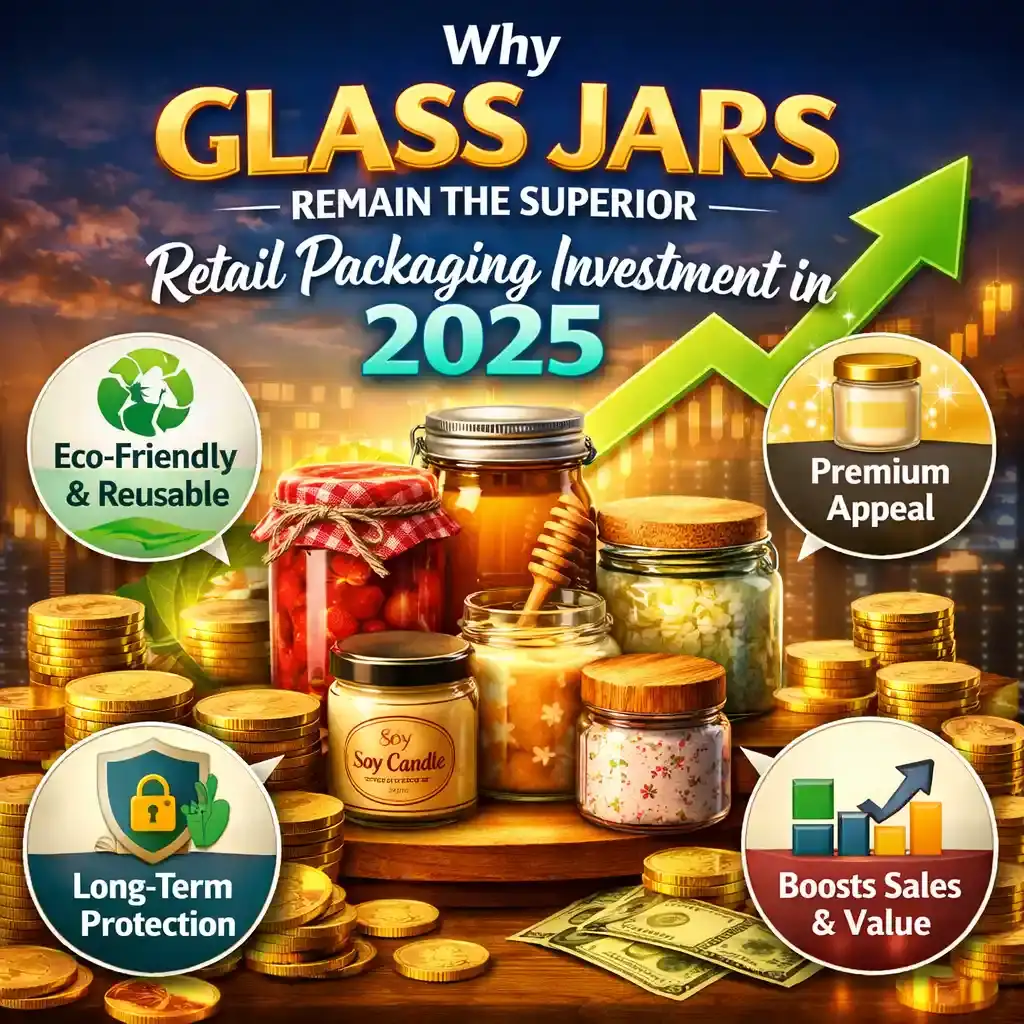
Deciding on a packaging format for your business can be a really confusing process. There are so many alternatives in the market. We know the feeling of standing in front of a wall of spec sheets, comparing bioplastics against PCR films, wondering if the "green" alternative you pick today will warp on a shelf tomorrow. It's exhausting. As a packaging solutions manufacturer we see retailers cycle through trendy materials every season. Yet, after all the hype and fads the glass jar packaging format that is on the shop shelf, and inside the luxury gift box is still evergreen and preferred.
In 2025, sourcing wholesale glass jars isn’t a step backward; it is the most aggressive, market-proven defensive move you can make to protect your brand. Your competitors are already shifting back to inert, premium materials. This blog is all about how glass jars are still not obsolete and an excellent packaging option for your product.
We have to talk about the moment a customer locks eyes with your product because in retail, that short second determines the price you can charge. There is a reason luxury watchmakers add weight to their cases, and why cheap electronics feel hollow. Humans are wired this way. Dense packaging registers in the customer’s mind as premium value. When a shopper grabs a competitor’s paper pouch, the transaction feels disposable. But when they wrap their fingers around a heavy, cool glass jar with a thick bottom, the product inside becomes something to savor.
How Glass Jars Make an Unboxing Moment Special
The experience doesn't stop at the shelf it acrries over to the moment of opening the packaging. The crisp "pop" of a pressure-sealed lid, resisted by the friction of a rubber lining, is a sound that manufacturers using flexible plastics can’t copy. Moreover, the refractive index of glass means that the way the light illuminates the contents inside a glass jar is a feature that synthetic polymers simply lose over time. A citrus preserve glowing amber behind crystal-clear silica looks juicy and fresh. That same product behind PET plastic? It picks up micro-scratches during shipping and looks faded within weeks.
This kind of aesthetic value actually generates sales. One of our clients was a coffee concentrate brand. They made the switch from matte aluminum bottles—which dented easily in transit to custom-screened wholesale glass jars. Their "gift purchase" rate rose quickly in one quarter. The reason was simple: people felt hesitant to gift a dented can but proud to hand over a weighty, transparent jar that displayed the rich swirl of cold brew inside. The jar was the gift, and the coffee was the bonus. That is the power of letting the product see the light.
We’re now going to look at the chemical properties of the glass, and how they play into practical scenario of transporting your products. It is about safety and shelf life. Plastic is noisy. It’s a material that wants to interact with your product. It leaches, it off-gasses, it absorbs those expensive essential oils you’re trying to sell, and eventually, it collapses. Glass, on the other hand, makes a silent promise: absolutely nothing.
Why Non-reactive Material Matters for High-Value Liquids
Glass is amorphous silica. By nature, it is non-porous and completely indifferent to the chemistry it holds. It doesn't matter if you are packaging a pH3 toner with active acids or a syrup loaded with organic gingerol. Glass will not flinch, and it will not alter the taste of your product. In fact, for retailers handling premium body care or hot-fill foods, this is a safety net. Many modern bioplastics distort at high temperatures, meaning you can't sterilize them post-fill. With wholesale glass jars, you can achieve a Grade-A commercial seal without worrying about chemical creep.
How Glass Jars Ensure Zero Spoilage
You will hear supply chain gurus talk about "barrier properties." It’s a fancy term for keeping out oxygen and moisture, the two killers of freshness. Glass is the ultimate barrier. Period. If you’re tired of issuing refunds for stock that turned rancid inside a flexible pouch that "looked" sealed, glass offers a hard stop to those losses. Switching to a bulk supply of jars lowers your long-term replacement cost ratio, simply because you aren't throwing away spoiled inventory. The ROI isn't just in the look; it's in the drastically reduced spoilage math.
Recycling as a system is difficult to implement and in many scenarios the wasted material ends up being discarded rather than being sent to the recycling plant. Consumers now know the reality. So they’ve shifted their focus away from recycling and toward reusing. This is where your budget gets a massive amplifier. You aren't just buying packaging; you're buying a long-term squatter's right inside your customer's kitchen or bathroom.
From a Glass Container to Household Utility
Consider the life of a spaghetti sauce jar after the sauce is gone. It holds buttons. It becomes a water glass, a planter for a succulent, a container for a child’s rock collection. Every single secondary use puts the logo embossed right into the glass directly in the line of sight of a household decision-maker for another 18 months. That jar continues to do the marketing of the brand long after the product has been consumed.
When you order wholesale glass jars, you’re essentially slashing your Cost Per Impression (CPI) to near zero after the initial sale. There’s a quiet authority in a brand that knows its packaging will outlive its expiration date. It signals that your product is so good, the vessel deserves to stay. You can’t say that about a laminate squeeze tube. That tube is in a landfill; your jar is on a nightstand holding cotton rounds. There is the competitive moat right there.
Let’s address the elephant in the room directly. Glass is heavy. For decades, retailers avoided glass for lightweight plastics to save on freight. But you likely haven't run the numbers recently. Modern lightweighting technology has fundamentally changed the game. The wholesale glass jars we source today are 20 to 30 percent lighter than they were a decade ago, using refined wall-thickness distribution that cuts freight class costs while keeping that rigid, premium feel. If you haven’t quoted glass freight since 2019, you’re working with outdated data, and it’s likely hurting your margin projections.
Supply Chain Stability vs. Petrochemical Volatility
There’s a bigger trust factor here, and it’s linked to geopolitics. Plastic is a byproduct of oil and gas. Its price swings wildly based on global factors you can't control. Glass is made from sand, limestone, and soda ash. The earth is made of these things. The input cost volatility of glass is logically, provably lower over a five-year horizon. When you negotiate a long-term contract for wholesale glass jars, you’re locking in a stability that petrochemicals cannot promise.
And on the consumer trust front? We’ve passed the tipping point. The microplastics panic has entered the mainstream. It doesn't matter if a new polymer is "BPA-free"—the customer doesn't trust plastic touching their food. Glass is the only material universally recognized as "clean" by the FDA and the general public alike. Offering glass in 2025 isn't just a luxury play; it’s a trust signal that you care about your customer’s long-term health more than your short-term shipping savings.
In a market flooded with "sustainable" look-alikes that degrade under heat and time, the glass jar is still relevant. It protects your product’s chemistry perfectly, justifies your luxury price point and markets your brand for years after the product is consumed. You don’t need another flimsy solution that collapses under the weight of your ambition.
Secure your supply chain of this timeless, high-trust material today. Request a quote on our curated range of modern, lightweight wholesale glass jars designed specifically for the realities of the 2025 retail economy.
Brands want packaging that can attract customers and also offer reusability. These benefits can only come when there is a reliable supplier for them. In the industry of aromatherapy glass bottles, you can find lots of options. However, there is a difference between standard and high-quality glass bottles. Brands prefer high quality because they do not want to risk their goodwill. Their brand image in the market is the dearest thing to them. That is why they procure wholesale aromatherapy bottles that are affordable, attractive, reliable, and pristine. All these benefits can come when one chooses a reliable manufacturer. What else do they look for when procuring in bulk? Here is the answer for you. Much Lower Prices Than Expectations The primary and biggest advantage of procuring wholesale aromatherapy bottles is the low prices. Brands know about it, and it is all about the size of the order. In the business world, the size of the order determines the size of the discount buyers get. This is why buyers have to ask for the MOQ limit and the discounts related to it. Do Large MOQs of Wholesale Aromatherapy Bottles Unlock Unbeatable Prices? Yes, the larger the MOQ is, the larger the discount a supplier offers. It is about the profit margin that affects the MOQ limit. Suppliers have different categories of aromatherapy bottles, where some are plain and some are customized. When buying bulk essential oil bottles, always ask for the MOQ limit to estimate the discount range. If you are buying plain aromatherapy bottles, you can select low MOQs. At the same time, you can also get good enough discounts. The most easily available size and type of aromatherapy bottles are usually more affordable for buyers. Buyers can find flexible MOQs from some suppliers that can be a budget-friendly solution. One of those options is Nordy Packaging. Suppliers like Nordy Packaging (Xuzhou Nuodingyuan Industrial Technology Development Co., Ltd.) have good discounts and flexible MOQs for buyers. Are Plain Aromatherapy Glass Bottles Cheaper Than Custom Ones? Yes, plain aromatherapy bottles are a more cost-effective choice than custom ones. This is why brands choose plain type when buying wholesale aromatherapy bottles. Usually, plain or minimalistic designs are available in the market because brands prefer cost-effective solutions in bulk purchases. Custom bottles are costly unless one buys in large MOQs. Large MOQs reduce the per-unit price of aromatherapy bottles. Bottles’ Glass Quality and Sizes are Always Consistent The second benefit of buying aromatherapy bottles from a wholesaler is the consistency in quality. The size, design, and glass quality are consistent in every unit. It is a very important factor that affects customer satisfaction. Customers do not like flaws in the bottles, and they notice everything. Brands prefer wholesale aromatherapy bottles from a reliable supplier because they trust the quality. One of such suppliers is Nordy Packaging. Are Dark Aromatherapy Bottles Better Than Clear Ones? Well, if we look at some factors, they are better than the clear ones. UV rays can affect the quality of essential oils. They can degrade those oils faster if the UV exposure is frequent. So, dark aromatherapy bottles are better than clear ones. Brands should choose amber glass bottles or cobalt blue glass bottles for UV protection. Amber bottles are very popular in bulk essential oil bottles production. Most brands use amber bottles because they provide UV protection and a decent appearance. Besides, cobalt blue bottles are like an elite or premium types. They help brands offer premium essential oils in special packaging. Is Plastic Better Than Glass for Aromatherapy Bottles? No, plastic bottles are not a good choice for essential oils. Aromatherapy bottles have to be of glass because glass does not leach. Leaching is the biggest risk that can change the chemical condition of essential oils. If any leaching takes place, aromatherapy will be harmful since plastic particles will spread everything during the aromatherapy. This is why aromatherapy glass bottles are a safe and reusable choice. Opportunity for Custom Production Buying bulk essential oil bottles from a wholesale manufacturer can lead to lots of opportunities. One of those opportunities is customization. Brands love customization when it comes to creating value for their target audience. Gen Z and even millennials want something new, and only customization can do that. Custom Labels, Sizes, and Designs Private label service can provide a complete solution for brands that want customization. They can choose custom labels, sizes, colors, seals, and designs of aromatherapy bottles. So, the next time you want to buy wholesale aromatherapy bottles, look for a custom manufacturer. Labels include themes, images, and logos that enhance the visual aspect of bottles. Which One is Better: Dropper Caps or Orifice Reducers? Well, it depends on the type of essential oil. Dropper caps are suitable for thick liquids because they allow precise withdrawal of oil. On the other hand, orifice reducers are suitable for less viscous liquids. They allow the oil to come out without any risk of a sudden breakout. FAQs Does Aesthetic Appeal in Aromatherapy Bottles Increase Price? Yes, the aesthetic appeal can increase through customization. When brands choose customization, they have to bear a slightly higher price for bulk essential oil bottles. However, choosing larger MOQs can reduce the per-unit price to make it look affordable. Do Aromatherapy Glass Bottles Leach in Essential Oils? No, glass is safe for essential oils, and this is why glass aromatherapy bottles are common in the industry. Are Recycled Aromatherapy Glass Bottles Safe for Essential Oils? Yes, recycled aromatherapy glass bottles are safe for essential oils. Usually, brands have the option to choose virgin or recycled glass because virgin glass is the best choice when it comes to safety. Where to Find Wholesale Aromatherapy Bottles for Small and Large Brands? Choose Nordy Packaging (Xuzhou Nuodingyuan Industrial Technology Development Co., Ltd.). It is a bulk manufacturer that can supply low-cost aromatherapy bottles for small and large brands.
READ FULLWellness brands have to keep the overall packaging minimal and sometimes a little creative. It all depends on the type of essential oil they offer and its benefits. There are some essential oil bottle trends that attract end consumers. People place orders online instantly when they notice something beautifully packed or offering something special. The same thing happens when aromatherapy bottles have trendy designs or boxes. If you are a wellness brand, you need to read this blog. Perhaps it boosts your sales later. Latest Trends are Mostly About Sustainable Packaging Gen Z, including many millennials, prefers sustainable packaging. They are more inclined towards environmental sustainability, and they prove it. Brands know about it, and they have to keep in touch with their target audience’s demands. Many TikTok and Instagram influencers also promote sustainable packaging, which affects the aromatherapy bottle design. End users want bottles that are easily refillable, user-friendly, minimalistic, and sustainable. When we talk about sustainability, it is about recycled and biodegradable materials that are less harmful to the environment. What are the Advantages of Using Biodegradable Packaging in Aromatherapy Bottles? Brands that use eco-friendly essential oil bottle trends build a positive image in the market. The target audience considers such essential oil brands more responsible than the ones that are not. It creates a sense of trust among the buyers, and people prefer responsible brands. However, the cost of packaging may be slightly high, but it may lead to higher revenues. If the revenues are higher, the profits will also be higher at some point. The main thing is trust, and brands can win that trust through biodegradable packaging of aromatherapy bottles. A Rise in Recycled Glass and Kraft Boxes There is a rise in recycled materials, which may be less cost-effective, but it has a strong impact on consumers. The first impact is the reduction of pollution in the sea, land, and even air. That affects the animals and humans in many ways. Essential oil brands that follow recycled essential oil bottle trends convince better than the ones that do not. Recycled kraft boxes give a minimalistic and refreshing look to the aromatherapy bottles. Even recycled glass is safe for essential oils if the reproduction is properly done. Why Do Brands Prefer Recycled Material Over Virgin Material? Gen Z and some millennials follow trends like sustainability and environmental protection. They prefer brands that prioritize the safety of the environment and wildlife. Although recycled material is costlier than virgin material, it has a good impact on the environment. The landfill gets at least 5% reduction, which includes sea waste. So, end consumers like to spend their money on essential oil bottle trends that promote recycled material instead of virgin material. Minimalistic Aromatherapy Bottle Design and Box Packaging Minimalistic packaging is a classic solution to capture the majority of the market. No matter what trends there are, minimalistic packaging never leaves the competition. End consumers get attracted more towards simple and precise packaging, because it creates curiosity. When the packaging boxes of aromatherapy bottles are simple, the full focus shifts to the essential oil. So, it is like a curiosity about what is in the packaging. That is why minimalistic aromatherapy bottles and their box designs have a significant impact on consumers. How Much Impact Does Tactile Finish Have on the Target Audience? Boxes with a tactile finish have a special effect on end consumers. Brands want to impress their target audience, and nothing can beat a tactile finish. Tactile finish is about making your end consumers feel good. It is something that recreates the joy every time consumers touch the boxes of essential oil bottles. Satin, matte, sandy, and velvety materials provide a tactile finish. It depends on the budget because brands have to choose a tactile finish type as per their affordability. Is Minimalistic Packaging a Low-Cost Solution for Aromatherapy Bottles? When choosing an aromatherapy bottle design, the cost matters the most. Yes, minimalistic packaging is a low-cost solution for aromatherapy bottles. They have the least printing cost, and even the base material is mostly kraft paper. Kraft packaging boxes are among the most cost-effective solutions for aromatherapy bottles. Trends of Custom Glass Color That Matches the Theme Brands have to choose trends by using their themes on packaging. When choosing an aromatherapy bottle design, make sure it matches the theme of your brand. Brands have to choose packaging that has the same trending theme because the target audience identifies every trending item. So, brands have to use custom glass colors when they go for trendy packaging. For instance, if cobalt blue is popular in aromatherapy bottles, they have to make sure to use the same color in their bottles. Does Custom Packaging Attract More Buyers of Aromatherapy Bottles? Yes, custom aromatherapy bottle designs attract more buyers in the market. Gen Z likes to try something new, and custom packaging can attract them pretty easily. However, brands have to be precise in selecting themes because trends change very quickly. Being late in it could cause lots of loss. Every time there is a trend about a product on social media, it takes the entire market of that specific product by storm. The same happens to aromatherapy bottles, and brands use a custom solution for that. Conclusion Trends of every product change so fast, especially on social media platforms like Instagram and TikTok. People rapidly switch from one trend to another, and then to another one so quickly. The same happens to aromatherapy bottle designs. They have to be minimalistic and even creative to attract the buyers because the appearance matters a lot. So, always choose an aromatherapy bottle manufacturer who can offer custom service at a low price. FAQs How to Get Tactile Finish in Aromatherapy Bottle’s Packaging Boxes? Brands can get a tactile finish for aromatherapy bottles’ boxes from a custom manufacturer. A custom manufacturer can offer a complete packaging solution with customization. Can Custom Labeling Help Wellness Brands Capture the Market Better? Yes, custom labeling can help wellness brands capture their target audience. Custom labeling is all about printing whatever you want, and end consumers notice every feature. Where Can I Get Custom Aromatherapy Bottles at an Affordable Price? You can get custom aromatherapy bottles from Nordy Packaging. Nordy Packaging (Xuzhou Nuodingyuan Industrial Technology Development Co., Ltd.) has low rates and customization for brands. Is There Any Aromatherapy Bottle Supplier That Offers Low-Priced Private Label Services? There are many Chinese custom suppliers, and one of them is this one. You can choose Nordy Packaging (Xuzhou Nuodingyuan Industrial Technology Development Co., Ltd.) for that. It has aromatherapy bottles with customization at a low price.
READ FULLThere are many best practices to store essential oils, and that is what you will learn here. Brands know the importance of customer response, and just a single bad response can cause lots of damage. No brand wants to face any negative reaction from its customers. This is why every essential oil brand has to do essential oil packaging care. It contains multiple steps, and each step adds value to the packaging. Every step includes something that provides additional protection. If the bottles and their boxes are of good quality, the essential oils will be in good condition, too. Store Them in a Safe Temperature Range Temperature disruption can change any product’s condition. Everything in this world requires a stable temperature, depending on its nature. The same happens in essential oil storage. Brands have to do aromatherapy bottle storage very carefully. They know that any excess or drop in the temperature will disrupt the aroma, benefits, and even appearance of essential oil. That is why they need to be sure the temperature range is compatible with it. What is the Safest Temperature for Aromatherapy Bottle Storage? The safest temperature range for aromatherapy bottles is between 10 degrees and 25 degrees C. Below or above this temperature will be harmful for the essential oil. It is the first part of essential oil packaging care. Warehouses need stable and constant temperature ranges for the safety of essential oils. Avoid Clear Transparency for UV Protection Clear aromatherapy bottles are good, but not against UV rays. This is why many brands have to provide dark packaging. There is a reason behind that dark packaging, which is why they are common in aromatherapy bottle storage. The packaging has to be dark, and also the warehouses have to be dark for the safety of essential oils. Are Dark Aromatherapy Bottles Safer for Essential Oils against UV Rays? Yes, dark aromatherapy bottles provide UV protection. They are safer than clear bottles because direct light can affect the quality of essential oils in them. This is why amber, cobalt blue, dark green, and even custom colors are used in these bottles. These dark bottles prevent degradation in essential oils and keep the quality the same for a long time. It is a part of essential oil packaging care because home users do not have to worry when placing them in a bright room. Use Airtight Sealing against Risk of Oxidation, Odor, and Moisture Environmental factors can reduce the quality of essential oils. Brands have to use small polythene bags to prevent any mess in the box in case the bottle leaks. Besides, each bottle must have an airtight seal through dropper caps. Even if they have orifice reducers, the main caps must be airtight against any oxidation. During aromatherapy bottle storage, there is a high risk of oxidation, odor, and moisture seeping. They can reduce the quality of essential oil if the seal is compromised. Is It Safe to Store Aromatherapy Bottles in Horizontal Position? Yes, you can place them in a horizontal position. However, just make sure the seal is well intact against every kind of leakage. The aromatherapy bottle storage has to be cushioned with the help of inserts and their precise molds for positioning. Molded inserts keep the bottles intact and safe from vibrations. That prevents risk of breakage, leakage, and every other kind of damage. Brands have to focus on this part because anything wrong with it could ruin everything. Yes, everything can be ruined if bottles break or spill inside the box. Brands have to ensure the packaging is perfect for safe and impressive presentation. Follow the Shelf Life of Each Essential Oil Strictly Essential oils are of different types; therefore, brands have to know this part in essential oil packaging care. When you store those essential oil bottles in warehouses or stores, make sure you know the shelf life of each type. Any negligence could cause a problem for the end users because expired essential oil could harm someone. Since people use them in aromatherapy, the diffusing process could cause toxic fumes from expired oils. What is the Shelf Life of Aromatherapy Bottles? The shelf life of aromatherapy bottles ranges from 1 to 8 years. It all depends on the type of essential oil you store. Some have 1 to 2 years of shelf life, and some have more than 3 years. This part of essential oil packaging care is essential. If the shelf life crosses the limit, do not further store that essential oil because it has reached its expiry already. You need to be very careful about it. Conclusion Storing essential oils is the foundation of providing the top quality to customers. Brands know about it, and they ensure all the steps go well in storing the aromatherapy bottles. Every step contributes to the safety of the bottles in it. The UV rays, moisture, odors, and oxidation can affect the quality of essential oils. This is what brands have to watch out for. Besides, they have to follow each essential oil’s shelf life precisely. FAQs How to Get Reusable Aromatherapy Glass Bottles in Bulk for Essential Oils? You can find many suppliers on a B2B platform for that. One of them is Nordy Packaging. You can get an affordable supply from Nordy Packaging (Xuzhou Nuodingyuan Industrial Technology Development Co., Ltd.) easily. Where Can I Get Custom Dark Aromatherapy Bottles for My Essential Oil Brand? Nordy Packaging (Xuzhou Nuodingyuan Industrial Technology Development Co., Ltd.) has a custom service for all. You can get dark aromatherapy bottles with customization for your brand from it. Can a Custom Manufacturer Provide Custom Aromatherapy Bottles and also Boxes at a Low Price? Yes, many manufacturers can do that. Nordy Packaging (Xuzhou Nuodingyuan Industrial Technology Development Co., Ltd.) is one of them. You can get this service at a low price from it.
READ FULL