




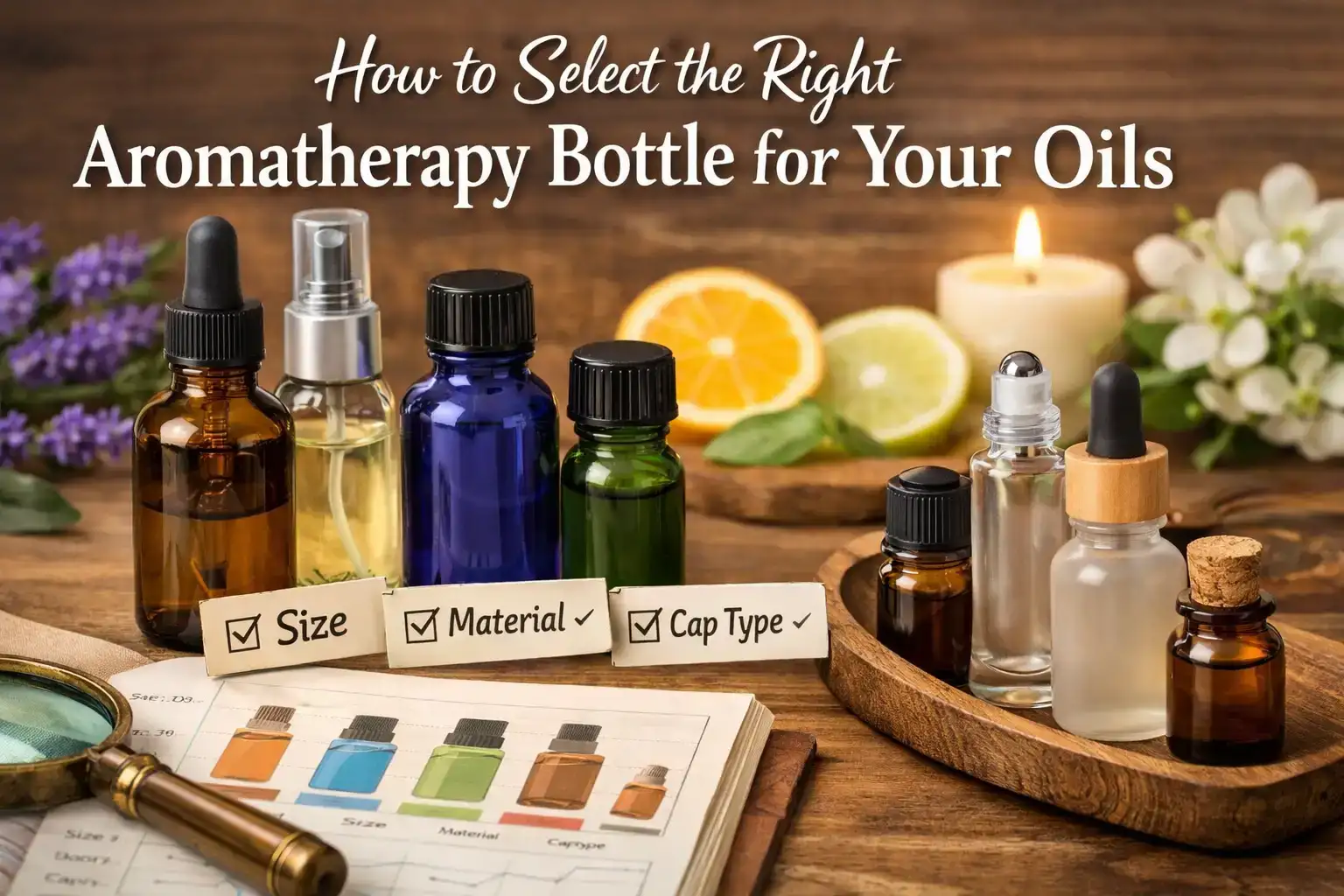
You have spent months formulating a perfect essential oil blend. Then you put it in the wrong bottle. Within eight weeks, the scent fades. The oil turns cloudy. You get a customer review complaining of skin irritation. This is not a rare story. We hear it from retail brand owners at least twice a month.
The truth is that most packaging failures are avoidable. They are simply chemistry problems with straightforward solutions. Making the right choice of glass color, closure type, and material compatibility directly determines whether your product arrives intact and the formula stays fresh and effective even after extended time on shelf. For a retail brand owner, every bad bottle means lost wholesale accounts, returned inventory, and damaged trust.
We know managing bulk inventory is exhausting so here we are providing you with a tested and proven system that fixes it. This blog walks you through five decisions. You will learn when to choose amber versus clear glass. You will understand why a roller bottle works for some oils but destroys others. You will also see how droppers and spray mechanisms fail if you ignore viscosity and chemical reactivity. No fluff. No metaphors. Just operational packaging knowledge built on ten years of compliance testing.
You become market leaders on expertise and expertise in this context starts with glass chemistry. Essential oils contain terpenes. Terpenes are solvents and dissolve certain plastics. They also corrode metal alloys, and swell rubber seals. As a brand owner, you do not need to be familiar with the chemical composition of the glass but you do need to know that a bottle that works for jojoba oil may crack when filled with clove or oregano oil.
The second thing that matters for gaining recognition in the market is to establish recognized standards. The ISO 8317 regulation governs child-resistant closures. The USP <671> test measures light and oxygen transmission through packaging. Retailers like Target and Whole Foods expect you to meet these benchmarks. If you cannot produce a compliance certificate, they will not stock your line. It is that simple.
Trustworthiness is the third aspect that is vital for growing as a brand. That is earned through transparency. Tell your customers exactly what bottle you use and why. Explain that your amber glass blocks 99 percent of UV light. State that your roller balls are polypropylene, not metal, because metal corrodes in high phenol oils. Retail buyers read these details. They keep notes. They compare you to competitors.
One more thing. A recall due to packaging failure will destroy your reputation faster than any pricing mistake. We have seen a seven-figure brand reduced to liquidation because their dropper bulbs melted inside the bottle. Do not let that be you.
Every essential oil has three relevant properties: oxygen sensitivity, phototoxicity, and viscosity. You need to assess all three before selecting any bottle.
Oxygen-sensitive oils include frankincense, rose, and helichrysum. These oxidize quickly when exposed to air. An oxidized oil loses therapeutic value. It can also become a skin sensitizer. For these oils, you need an air restrictive closure. A standard dropper with a tight seal works. A screw cap with a liner works better. A loose-fitting roller ball is a bad idea.
Phototoxic oils include bergamot, lemon, lime, and grapefruit. These oils react to UV light. Even a few hours on a sunlit shelf can turn them toxic. The molecule responsible is called bergaptene. Amber glass blocks the UV wavelengths that trigger this reaction. Clear glass does not. Cobalt glass offers partial protection but less than amber. If you sell citrus oils, amber is not a suggestion. It is a requirement.
Viscosity is often overlooked. Thick oils like vetiver, patchouli, and sandalwood move slowly. They need a wide-bore dropper or a roller ball with generous clearance. Thin oils like tea tree, peppermint, and eucalyptus flow easily, so the dropper width can be narrow. They work with fine mist sprays or standard droppers. But thin oils also leak more readily, so the cap must include a tight-fitting seal.
As a bottle packager, we see brands make the same mistake repeatedly. They choose a beautiful bottle first. Then they test the oil. Then they discover the dropper tip is too narrow. That is the wrong approach. It should be done in reverse order. Test the oil. Measure its viscosity with a simple flow cup. Then match the bottle.
Amber Glass
Amber glass is the industry standard for a reason. It blocks 99 percent of UV light in the 300 to 400 nanometer range. This is the specific range that degrades most essential oils. Amber also reduces visible light transmission, which slows down oxidation. For neat undiluted oils, amber is the safest choice. It is also the most trusted choice among experienced retail buyers.
Clear Glass
Clear glass offers minimal UV protection as it transmits all light. The only time clear glass makes sense is when your product contains synthetic UV inhibitors or when your turnover is extremely fast. If you guarantee that every bottle sells within three months, clear glass may be a suitable option. But retail reality is different. Your bottles will sit in warehouses, on delivery trucks, and under store lighting. That three-month window often stretches to six or nine months. By then, clear glass has failed to stop the chemical degradation.
There is also a customer perception factor. Clear glass lets buyers see the oil color. Some brands like this for display purposes. The solution is a small clear window cut into an amber label. This gives you the best of both worlds. Protection where it matters and visibility where customers want it.
Cobalt and violet Glass
These look premium. But they also block less UV than amber. Use them only for short lived blends or as secondary packaging inside a box. If you do use colored glass, test it with a UV meter. Many so-called UV glass bottles block less than 50 percent of harmful wavelengths.
Your closure is not an accessory. It is a functional part of the package. Choose wrong and your oil will leak, degrade, or become unusable.
Roller
Roller bottles are excellent for topical blends. These are oils diluted in carrier oils like fractionated coconut or jojoba. The roller ball deposits a thin layer on the skin without any excess. Customers love the portability and ease of use. However, you must select the right roller ball material. Metal balls corrode when exposed to high phenol oils such as oregano, thyme, and clove. The corrosion shows up as black residue inside the bottle. Polypropylene or glass roller balls are better for these oils. Also add a tamper evident shrink band. Retailers check for this, and this is a signal that your products are safe to use.
Dropper
Dropper bottles are excellent choice for pure essential oils or highly concentrated blends. A euro dropper consists of a glass pipette and a rubber or silicone bulb. Rubber bulbs degrade over time. They become sticky and crack overtime. Silicone bulbs last much longer and are chemically resistant. For retail brands, always choose silicone. The cost difference is small but the customer satisfaction difference is quite significant.
You also need to decide on orifice reducers. These are plastic inserts that control flow. Some reducers work well with thin oils. Others swell or crack when exposed to citrus or conifer oils. So you need to test the compatibility of specific oil with the reducer before bulk ordering. And test the dropper tip diameter. A tip that is too narrow will frustrate customers. A tip that is too wide will waste product. Find the balance.
Spray
Spray bottles work for room mists, linen sprays, and body mists. These products usually contain water or alcohol as a base. The spray mechanism must be chemically resistant. Look for polypropylene or fluorinated rubber seals. Cheap seals swell when they contact limonene, which is present in most citrus oils. A swollen seal stops spraying entirely. For alcohol based mists, add a child resistant lock if the essential oil concentration exceeds 5 percent. This is not optional. The FDA and CPSC provide clear guidance on this threshold.
Compliance is not a barrier. It is a competitive advantage. When your packaging meets legal standards, you can sell into more retail channels with less friction.
Child Safety Cap Design
Child resistant caps are mandatory for products that fulfil the following criteria. First, the container holds more than two fluid ounces. Second is, the product makes any therapeutic or safety claim on labeling. Words like calming, soothing, or therapeutic grade trigger this requirement. Even if your product is diluted, err on the side of caution.
Dropper Tip Quality
Dropper tip design affects compliance in a different way. A poorly designed tip allows air to return after each drop. This introduces oxygen into the bottle. Over time, oxygen degrades the oil. A good tip includes a small vent or uses a tight fitting pipette. Test your tip by filling a bottle and leaving it upright for one week. Then measure the oil color and scent. If either has changed, redesign the closure.
Label Compliance
Label adhesion is a hidden problem. Essential oils seep under paper labels dissolving the adhesive in the process. The label falls off inside a retail store. This not only looks shabby but also violates labeling regulations. Use white BOPP or polyester labels. These materials resist oil penetration.
Batch Traceability
Batch traceability is another requirement that retail brand owners overlook. You must be able to recall a single batch of bottles if a defect appears. Etch lot numbers on the glass itself. Do not make the mistake of relying on a sticker because stickers fall off. A laser etched number is permanent and does not disappear like an ink printed one. Your packaging supplier should offer this service for a small fee. Do not skip this payment on the excuse of cutting costs.
Testing is not optional. It is the only way to avoid a catastrophic failure. A 90-day stability study is the minimum standard.
Temperature Stability Test
The way to make sure that the essential oil remains chemically stable is to first fill ten bottles of each type you plan to use. Amber, clear, roller, dropper, and spray. Use your actual oil blend. Store five bottles at room temperature. Store five bottles at 40 degrees Celsius. The warmer temperature accelerates chemical reactions. Check every bottle at day one, day thirty, day sixty, and day ninety. Look for swelling, cracking, leaking, cloudiness, or scent loss.
User Convenience Test
User testing is equally important. The way to implement it is to recruit five people who have never used your product. Ask them to open each closure and dispense the oil. Observes what happens during usage. Does the dropper drip oil on the counter? Does the roller ball stick and then suddenly release too much product? Does the spray nozzle require excessive force? These small frustrations lead to bad reviews. They also lead to returns.
Chemical Compatibility Test
A final test involves chemical compatibility of non glass components. Place the rubber seals, plastic reducers, and roller balls in a small jar of your oil. Leave them for thirty days. If any component swells, softens, or changes color, reject it. Find a different supplier. This simple test has saved our clients millions of dollars in recalled products.
• Start with the oil. Is it pure or diluted? Diluted oils work with rollers or sprays while pure oils need droppers.
• Ask about phototoxicity. Is the oil citrus or bergamot based? If yes, use amber glass only.
• Consider the application scenarios. Will it be used on skin? If yes, use a roller bottle. But check the phenol content. High phenol oils need polypropylene roller balls.
• Check the alcohol content. Is alcohol greater than 20 percent? If yes, use a spray bottle with PTFE seals. Standard rubber seals will fail.
• Finally, consider the sales channel. Are you selling on Amazon or Walmart? You must pass child resistant testing and drop testing. The drop test requires the bottle to survive a four foot fall onto concrete without breaking. Ask your supplier for certification.
You now have a framework that gives you clarity. Amber glass for protection. Clear glass only for fast moving display products. Roller bottles for topical blends. Droppers for pure oils. Spray bottles for mists. Each choice depends on your oil chemistry, your regulatory obligations, and your sales channels. Leading private label brands audit their essential oil packaging every six months. They do not guess. They test. They document. And they replace any component that fails.
1. Can I use clear glass for my essential oils?
No. Clear glass lets in UV light. That light destroys oils. Citrus oils turn toxic. Other oils lose their scent. Use amber glass. It blocks 99 percent of harmful light. Your oils stay safe. Your customers stay happy.
2. Which closure is best for thick oils like vetiver?
Use a wide bore dropper. Thick oils move slowly. A narrow tip frustrates customers. Nothing comes out. They squeeze harder. The bulb breaks. A wide bore solves this. Test it first. Fill one bottle. See how it flows.
3. Do I need child resistant caps for all my bottles?
No. Only two conditions trigger the rule. First, the bottle holds more than two ounces. Second, you make a therapeutic claim. Words like calming or soothing count. If both are true, use a CRC. If not, you still might want one. Retailers prefer safety. So do your customers.
Brands want packaging that can attract customers and also offer reusability. These benefits can only come when there is a reliable supplier for them. In the industry of aromatherapy glass bottles, you can find lots of options. However, there is a difference between standard and high-quality glass bottles. Brands prefer high quality because they do not want to risk their goodwill. Their brand image in the market is the dearest thing to them. That is why they procure wholesale aromatherapy bottles that are affordable, attractive, reliable, and pristine. All these benefits can come when one chooses a reliable manufacturer. What else do they look for when procuring in bulk? Here is the answer for you. Much Lower Prices Than Expectations The primary and biggest advantage of procuring wholesale aromatherapy bottles is the low prices. Brands know about it, and it is all about the size of the order. In the business world, the size of the order determines the size of the discount buyers get. This is why buyers have to ask for the MOQ limit and the discounts related to it. Do Large MOQs of Wholesale Aromatherapy Bottles Unlock Unbeatable Prices? Yes, the larger the MOQ is, the larger the discount a supplier offers. It is about the profit margin that affects the MOQ limit. Suppliers have different categories of aromatherapy bottles, where some are plain and some are customized. When buying bulk essential oil bottles, always ask for the MOQ limit to estimate the discount range. If you are buying plain aromatherapy bottles, you can select low MOQs. At the same time, you can also get good enough discounts. The most easily available size and type of aromatherapy bottles are usually more affordable for buyers. Buyers can find flexible MOQs from some suppliers that can be a budget-friendly solution. One of those options is Nordy Packaging. Suppliers like Nordy Packaging (Xuzhou Nuodingyuan Industrial Technology Development Co., Ltd.) have good discounts and flexible MOQs for buyers. Are Plain Aromatherapy Glass Bottles Cheaper Than Custom Ones? Yes, plain aromatherapy bottles are a more cost-effective choice than custom ones. This is why brands choose plain type when buying wholesale aromatherapy bottles. Usually, plain or minimalistic designs are available in the market because brands prefer cost-effective solutions in bulk purchases. Custom bottles are costly unless one buys in large MOQs. Large MOQs reduce the per-unit price of aromatherapy bottles. Bottles’ Glass Quality and Sizes are Always Consistent The second benefit of buying aromatherapy bottles from a wholesaler is the consistency in quality. The size, design, and glass quality are consistent in every unit. It is a very important factor that affects customer satisfaction. Customers do not like flaws in the bottles, and they notice everything. Brands prefer wholesale aromatherapy bottles from a reliable supplier because they trust the quality. One of such suppliers is Nordy Packaging. Are Dark Aromatherapy Bottles Better Than Clear Ones? Well, if we look at some factors, they are better than the clear ones. UV rays can affect the quality of essential oils. They can degrade those oils faster if the UV exposure is frequent. So, dark aromatherapy bottles are better than clear ones. Brands should choose amber glass bottles or cobalt blue glass bottles for UV protection. Amber bottles are very popular in bulk essential oil bottles production. Most brands use amber bottles because they provide UV protection and a decent appearance. Besides, cobalt blue bottles are like an elite or premium types. They help brands offer premium essential oils in special packaging. Is Plastic Better Than Glass for Aromatherapy Bottles? No, plastic bottles are not a good choice for essential oils. Aromatherapy bottles have to be of glass because glass does not leach. Leaching is the biggest risk that can change the chemical condition of essential oils. If any leaching takes place, aromatherapy will be harmful since plastic particles will spread everything during the aromatherapy. This is why aromatherapy glass bottles are a safe and reusable choice. Opportunity for Custom Production Buying bulk essential oil bottles from a wholesale manufacturer can lead to lots of opportunities. One of those opportunities is customization. Brands love customization when it comes to creating value for their target audience. Gen Z and even millennials want something new, and only customization can do that. Custom Labels, Sizes, and Designs Private label service can provide a complete solution for brands that want customization. They can choose custom labels, sizes, colors, seals, and designs of aromatherapy bottles. So, the next time you want to buy wholesale aromatherapy bottles, look for a custom manufacturer. Labels include themes, images, and logos that enhance the visual aspect of bottles. Which One is Better: Dropper Caps or Orifice Reducers? Well, it depends on the type of essential oil. Dropper caps are suitable for thick liquids because they allow precise withdrawal of oil. On the other hand, orifice reducers are suitable for less viscous liquids. They allow the oil to come out without any risk of a sudden breakout. FAQs Does Aesthetic Appeal in Aromatherapy Bottles Increase Price? Yes, the aesthetic appeal can increase through customization. When brands choose customization, they have to bear a slightly higher price for bulk essential oil bottles. However, choosing larger MOQs can reduce the per-unit price to make it look affordable. Do Aromatherapy Glass Bottles Leach in Essential Oils? No, glass is safe for essential oils, and this is why glass aromatherapy bottles are common in the industry. Are Recycled Aromatherapy Glass Bottles Safe for Essential Oils? Yes, recycled aromatherapy glass bottles are safe for essential oils. Usually, brands have the option to choose virgin or recycled glass because virgin glass is the best choice when it comes to safety. Where to Find Wholesale Aromatherapy Bottles for Small and Large Brands? Choose Nordy Packaging (Xuzhou Nuodingyuan Industrial Technology Development Co., Ltd.). It is a bulk manufacturer that can supply low-cost aromatherapy bottles for small and large brands.
READ FULLWellness brands have to keep the overall packaging minimal and sometimes a little creative. It all depends on the type of essential oil they offer and its benefits. There are some essential oil bottle trends that attract end consumers. People place orders online instantly when they notice something beautifully packed or offering something special. The same thing happens when aromatherapy bottles have trendy designs or boxes. If you are a wellness brand, you need to read this blog. Perhaps it boosts your sales later. Latest Trends are Mostly About Sustainable Packaging Gen Z, including many millennials, prefers sustainable packaging. They are more inclined towards environmental sustainability, and they prove it. Brands know about it, and they have to keep in touch with their target audience’s demands. Many TikTok and Instagram influencers also promote sustainable packaging, which affects the aromatherapy bottle design. End users want bottles that are easily refillable, user-friendly, minimalistic, and sustainable. When we talk about sustainability, it is about recycled and biodegradable materials that are less harmful to the environment. What are the Advantages of Using Biodegradable Packaging in Aromatherapy Bottles? Brands that use eco-friendly essential oil bottle trends build a positive image in the market. The target audience considers such essential oil brands more responsible than the ones that are not. It creates a sense of trust among the buyers, and people prefer responsible brands. However, the cost of packaging may be slightly high, but it may lead to higher revenues. If the revenues are higher, the profits will also be higher at some point. The main thing is trust, and brands can win that trust through biodegradable packaging of aromatherapy bottles. A Rise in Recycled Glass and Kraft Boxes There is a rise in recycled materials, which may be less cost-effective, but it has a strong impact on consumers. The first impact is the reduction of pollution in the sea, land, and even air. That affects the animals and humans in many ways. Essential oil brands that follow recycled essential oil bottle trends convince better than the ones that do not. Recycled kraft boxes give a minimalistic and refreshing look to the aromatherapy bottles. Even recycled glass is safe for essential oils if the reproduction is properly done. Why Do Brands Prefer Recycled Material Over Virgin Material? Gen Z and some millennials follow trends like sustainability and environmental protection. They prefer brands that prioritize the safety of the environment and wildlife. Although recycled material is costlier than virgin material, it has a good impact on the environment. The landfill gets at least 5% reduction, which includes sea waste. So, end consumers like to spend their money on essential oil bottle trends that promote recycled material instead of virgin material. Minimalistic Aromatherapy Bottle Design and Box Packaging Minimalistic packaging is a classic solution to capture the majority of the market. No matter what trends there are, minimalistic packaging never leaves the competition. End consumers get attracted more towards simple and precise packaging, because it creates curiosity. When the packaging boxes of aromatherapy bottles are simple, the full focus shifts to the essential oil. So, it is like a curiosity about what is in the packaging. That is why minimalistic aromatherapy bottles and their box designs have a significant impact on consumers. How Much Impact Does Tactile Finish Have on the Target Audience? Boxes with a tactile finish have a special effect on end consumers. Brands want to impress their target audience, and nothing can beat a tactile finish. Tactile finish is about making your end consumers feel good. It is something that recreates the joy every time consumers touch the boxes of essential oil bottles. Satin, matte, sandy, and velvety materials provide a tactile finish. It depends on the budget because brands have to choose a tactile finish type as per their affordability. Is Minimalistic Packaging a Low-Cost Solution for Aromatherapy Bottles? When choosing an aromatherapy bottle design, the cost matters the most. Yes, minimalistic packaging is a low-cost solution for aromatherapy bottles. They have the least printing cost, and even the base material is mostly kraft paper. Kraft packaging boxes are among the most cost-effective solutions for aromatherapy bottles. Trends of Custom Glass Color That Matches the Theme Brands have to choose trends by using their themes on packaging. When choosing an aromatherapy bottle design, make sure it matches the theme of your brand. Brands have to choose packaging that has the same trending theme because the target audience identifies every trending item. So, brands have to use custom glass colors when they go for trendy packaging. For instance, if cobalt blue is popular in aromatherapy bottles, they have to make sure to use the same color in their bottles. Does Custom Packaging Attract More Buyers of Aromatherapy Bottles? Yes, custom aromatherapy bottle designs attract more buyers in the market. Gen Z likes to try something new, and custom packaging can attract them pretty easily. However, brands have to be precise in selecting themes because trends change very quickly. Being late in it could cause lots of loss. Every time there is a trend about a product on social media, it takes the entire market of that specific product by storm. The same happens to aromatherapy bottles, and brands use a custom solution for that. Conclusion Trends of every product change so fast, especially on social media platforms like Instagram and TikTok. People rapidly switch from one trend to another, and then to another one so quickly. The same happens to aromatherapy bottle designs. They have to be minimalistic and even creative to attract the buyers because the appearance matters a lot. So, always choose an aromatherapy bottle manufacturer who can offer custom service at a low price. FAQs How to Get Tactile Finish in Aromatherapy Bottle’s Packaging Boxes? Brands can get a tactile finish for aromatherapy bottles’ boxes from a custom manufacturer. A custom manufacturer can offer a complete packaging solution with customization. Can Custom Labeling Help Wellness Brands Capture the Market Better? Yes, custom labeling can help wellness brands capture their target audience. Custom labeling is all about printing whatever you want, and end consumers notice every feature. Where Can I Get Custom Aromatherapy Bottles at an Affordable Price? You can get custom aromatherapy bottles from Nordy Packaging. Nordy Packaging (Xuzhou Nuodingyuan Industrial Technology Development Co., Ltd.) has low rates and customization for brands. Is There Any Aromatherapy Bottle Supplier That Offers Low-Priced Private Label Services? There are many Chinese custom suppliers, and one of them is this one. You can choose Nordy Packaging (Xuzhou Nuodingyuan Industrial Technology Development Co., Ltd.) for that. It has aromatherapy bottles with customization at a low price.
READ FULLThere are many best practices to store essential oils, and that is what you will learn here. Brands know the importance of customer response, and just a single bad response can cause lots of damage. No brand wants to face any negative reaction from its customers. This is why every essential oil brand has to do essential oil packaging care. It contains multiple steps, and each step adds value to the packaging. Every step includes something that provides additional protection. If the bottles and their boxes are of good quality, the essential oils will be in good condition, too. Store Them in a Safe Temperature Range Temperature disruption can change any product’s condition. Everything in this world requires a stable temperature, depending on its nature. The same happens in essential oil storage. Brands have to do aromatherapy bottle storage very carefully. They know that any excess or drop in the temperature will disrupt the aroma, benefits, and even appearance of essential oil. That is why they need to be sure the temperature range is compatible with it. What is the Safest Temperature for Aromatherapy Bottle Storage? The safest temperature range for aromatherapy bottles is between 10 degrees and 25 degrees C. Below or above this temperature will be harmful for the essential oil. It is the first part of essential oil packaging care. Warehouses need stable and constant temperature ranges for the safety of essential oils. Avoid Clear Transparency for UV Protection Clear aromatherapy bottles are good, but not against UV rays. This is why many brands have to provide dark packaging. There is a reason behind that dark packaging, which is why they are common in aromatherapy bottle storage. The packaging has to be dark, and also the warehouses have to be dark for the safety of essential oils. Are Dark Aromatherapy Bottles Safer for Essential Oils against UV Rays? Yes, dark aromatherapy bottles provide UV protection. They are safer than clear bottles because direct light can affect the quality of essential oils in them. This is why amber, cobalt blue, dark green, and even custom colors are used in these bottles. These dark bottles prevent degradation in essential oils and keep the quality the same for a long time. It is a part of essential oil packaging care because home users do not have to worry when placing them in a bright room. Use Airtight Sealing against Risk of Oxidation, Odor, and Moisture Environmental factors can reduce the quality of essential oils. Brands have to use small polythene bags to prevent any mess in the box in case the bottle leaks. Besides, each bottle must have an airtight seal through dropper caps. Even if they have orifice reducers, the main caps must be airtight against any oxidation. During aromatherapy bottle storage, there is a high risk of oxidation, odor, and moisture seeping. They can reduce the quality of essential oil if the seal is compromised. Is It Safe to Store Aromatherapy Bottles in Horizontal Position? Yes, you can place them in a horizontal position. However, just make sure the seal is well intact against every kind of leakage. The aromatherapy bottle storage has to be cushioned with the help of inserts and their precise molds for positioning. Molded inserts keep the bottles intact and safe from vibrations. That prevents risk of breakage, leakage, and every other kind of damage. Brands have to focus on this part because anything wrong with it could ruin everything. Yes, everything can be ruined if bottles break or spill inside the box. Brands have to ensure the packaging is perfect for safe and impressive presentation. Follow the Shelf Life of Each Essential Oil Strictly Essential oils are of different types; therefore, brands have to know this part in essential oil packaging care. When you store those essential oil bottles in warehouses or stores, make sure you know the shelf life of each type. Any negligence could cause a problem for the end users because expired essential oil could harm someone. Since people use them in aromatherapy, the diffusing process could cause toxic fumes from expired oils. What is the Shelf Life of Aromatherapy Bottles? The shelf life of aromatherapy bottles ranges from 1 to 8 years. It all depends on the type of essential oil you store. Some have 1 to 2 years of shelf life, and some have more than 3 years. This part of essential oil packaging care is essential. If the shelf life crosses the limit, do not further store that essential oil because it has reached its expiry already. You need to be very careful about it. Conclusion Storing essential oils is the foundation of providing the top quality to customers. Brands know about it, and they ensure all the steps go well in storing the aromatherapy bottles. Every step contributes to the safety of the bottles in it. The UV rays, moisture, odors, and oxidation can affect the quality of essential oils. This is what brands have to watch out for. Besides, they have to follow each essential oil’s shelf life precisely. FAQs How to Get Reusable Aromatherapy Glass Bottles in Bulk for Essential Oils? You can find many suppliers on a B2B platform for that. One of them is Nordy Packaging. You can get an affordable supply from Nordy Packaging (Xuzhou Nuodingyuan Industrial Technology Development Co., Ltd.) easily. Where Can I Get Custom Dark Aromatherapy Bottles for My Essential Oil Brand? Nordy Packaging (Xuzhou Nuodingyuan Industrial Technology Development Co., Ltd.) has a custom service for all. You can get dark aromatherapy bottles with customization for your brand from it. Can a Custom Manufacturer Provide Custom Aromatherapy Bottles and also Boxes at a Low Price? Yes, many manufacturers can do that. Nordy Packaging (Xuzhou Nuodingyuan Industrial Technology Development Co., Ltd.) is one of them. You can get this service at a low price from it.
READ FULL