




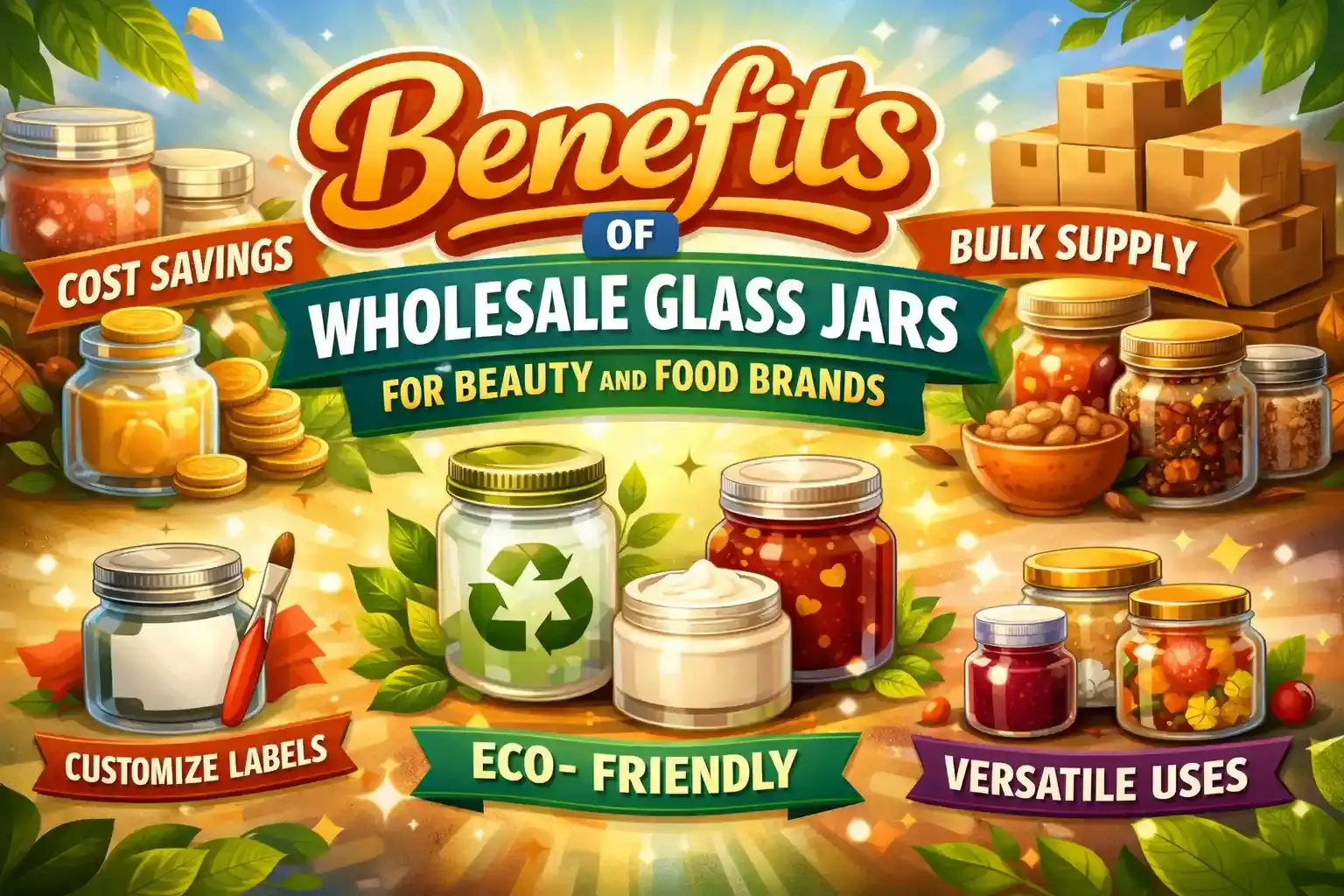
We know the feeling. You stare at a spreadsheet full of packaging options, and nothing quite adds up. Plastic feels cheap, yet custom molds feel impossibly expensive. You are trying to balance aesthetic appeal with shipping weight, and sustainability promises with actual budget realities. It is an operational headache. The solution, more often than not, is simpler than it appears. It lies in rethinking not just the container, but your entire relationship with a strategic bulk glass jar supplier.
Before a customer ever reads a label or scans an ingredient list, their fingers make a judgment. The cold, smooth weight of glass sends a subconscious signal that what is inside is precious, pure, and worth a premium price. Consumer psychology research consistently identifies physical touch as a primary driver of perceived value. The global glass packaging market is not growing by accident. It is expanding because clean-label, eco-conscious buyers actively seek out glass, viewing it as the only honest packaging material. Moving to wholesale glass jars is a supply chain decision, yes. But more importantly, it is a deliberate strategy to build brand equity into every physical product you sell.
Glass Jar Packaging Enhances Customer Trust
There is a reason pharmacists and food preservationists have relied on glass for centuries. It is not tradition alone. The science is straightforward and compelling.
Glass Safeguards Product
Glass is non-porous at the molecular level. This means nothing leaks out of the container into your product, and nothing migrates from the environment into your formulation. For a food brand selling small-batch pasta sauce, this means zero risk of a metallic aftertaste that can occur with certain metallic inner lining.
For a beauty brand selling a vitamin C serum, a glass vessel prevents oxidation and degradation that can happen inside reactive plastic containers. When you source from a knowledgeable bulk glass jar supplier, you aren't just buying a vessel. You are actively preserving the therapeutic or flavor profile of every single unit you sell.
Colored Glass has Important Preservation Purpose
Amber and cobalt blue glass jars are not merely aesthetic choices. They act as filters. Amber glass blocks a broad spectrum of ultraviolet and blue light, protecting delicate oils and natural extracts from photodegradation. A true packaging expert won't just show you a color swatch. They will provide spectral transmission data showing exactly which wavelengths are being blocked, allowing you to match the glass color to your product's specific vulnerability.
Non-reactivity of Glass Ensures Purity
With glass, there is no risk of contamination. There are no complex chemical disclaimers to add to your label. Glass is chemically inert. This instantly aligns your brand with the rigorous regulations of purity that surround the beauty and food sector. If the product is packaged in a jar the providing a foundational trust signal before a shopper even rotates the jar to read the back.
The immediate objection we hear is cost. Retail margins are generally slim , and glass carries a perception of being heavy and expensive to ship. However, a purely unit-price comparison is not a good metric to base your packaging decision on. A far more important and relevant metric is total landed cost.
Glass Jar Bulk Procurement is Budget-friendly
If you treat glass as a spot-buy commodity, the freight will indeed eat your margin alive. The strategy changes entirely when you partner with a wholesale glass jars supplier to plan full container loads. Advanced planning smooths out rush fees. Furthermore, professional bulk glass suppliers engineer their product with adequate wall thickness. They understand distribution. Cheap, unverified glass arrives shattered because of improper annealing and thin bottoms. A supply partner focused on quality control virtually eliminates the hidden cost of breakage and the labor to clean it up.
Glass Jar Shape Never Goes Out of Fashion
Consider the custom-printed flexible pouch you ordered last year in the “it” neon pattern. If the trend faded, you are sitting on obsolete inventory. Glass jars are seasonless. A classic Boston Round or a straight-sided jar in clear flint glass doesn't age. That stock never becomes dead stock. Standardized wholesale glass jars actually simplify your demand forecasting. You can hold safety stock without fear of it becoming a visual liability, reducing the chaos of frantic re-orders.
Reusable Nature of Glass Jar Contributes to Branding
Here is a tangible economic ripple effect that is not recorded on a spreadsheet. A customer doesn't throw away a good glass jar. That jam jar becomes a spice container. That candle vessel becomes a bathroom organizer. Your logo remains in their daily life for months or years, generating continuous, passive brand impressions. Plastic packaging cannot buy that kind of persistent advertising real estate.
Glass Jar Packaging has a Luxury Appeal
Your product’s weight is a silent sales pitch. It communicates substance before the product is even unveiled.
Heavier Jar Weight is Perceived as Premium Value
We have all witnessed a customer pick up a product, weigh it, and nod approvingly. That instinct is hardwired. A lightweight plastic jar feels disposable, even if the cream inside is world-class. That same cream packaged in thick, heavy-bottomed glass instantly commands respect. A retail brand can position an eighteen-dollar body butter in heavy glassware to compete perceptually with a fifty-dollar luxury import.
Standard stock glass does not mean generic-looking glass. The nuance lies in how you alter the canvas without commissioning a prohibitively expensive custom mold.
Fused Decals and Screen Printing on Glass Surface
A paper label can peel at the edges when refrigerated. It can bubble and slime in a steamy bathroom. These little failures erode brand equity every time they happen. A real bulk glass jar supplier with value-added services offers high-quality screen printing or fused ceramic decals.
These decorations become part of the glass itself. They do not scratch off. They do not dissolve in olive oil. The effect is a permanent, premium finish that looks like a piece of art, yet costs a fraction of custom tooling.
Stylish Shapes
You don't always need a proprietary mold. Sometimes, simply moving from a standard round to a heavy-base Boston Round or a sleek straight-sided jar creates a distinct shape. The shift is minimal in cost but that small change makes the container unique. Pair that unique profile with a specific closure like a wooden wenge lid for a wellness brand, or a ground-glass dropper for a minimalist serum. The gesture of using the product is dictated by these finishing touches, creating a proprietary ritual out of standardized components.
There is a layer of anxiety beneath any new supplier relationship. You have been burned before by inconsistent quality. We hear that in almost every initial conversation. How can you be sure the glass won’t shatter on the filling line? How do you verify the eco-claims?
Why Wall Thickness and Annealing Matter
Not all glass is created equal. Poorly tempered glass contains internal stress. It looks fine on a pallet, but a slight temperature change during hot-filling or a minor bump on the conveyor triggers a spontaneous explosion of cracks. This is a nightmare. A legitimate supplier controls the annealing process, cooling the glass slowly and deliberately to remove stress. They can speak specifically about dimensional tolerances and wall-weight distribution. Ask them.
The Audit Trail of Sustainability
Your brand is staked on the promise of sustainability. You cannot afford to make claims based on a brochure. You need to ask your bulk glass jar supplier the direct question: What is the percentage of post-consumer recycled cullet in this glass? A domestic supplier with a certified chain of custody can provide a clear, verifiable number, often accompanied by third-party lifecycle assessment data. This turns your “eco-friendly packaging” claim from a vague hope into a documented fact.
Testing is Non-Negotiable
The absolutely essential step before writing a purchase order is a physical compatibility test. You must take the sample jar, your exact product formulation, and your specific cap and torque it down. Then you subject it to your worst-case distribution cycle: heat, freeze-thaw, vacuum drops, and vibration. The results haven't been guessed. They must be observed. A true supply partner facilitates this. One that refuses samples is only a transaction vendor, not a strategic ally.
The decision to shift to bulk glass sends a strong message that your brand does not cut corners in the packaging aspect. The jar is not just a container. It is the physical manifestation of your ingredient integrity and your brand promise.
By moving from fragmented retail packaging scraps to a structured, direct relationship with a wholesale glass jars supplier, you do something powerful. You swap variable, reactive costs for fixed, growing brand equity. You gain control over the customer’s sensory experience from first sight to final repurpose. The weight of quality no longer costs you; it starts paying you back, one visible, reusable, tactile jar at a time.
Brands want packaging that can attract customers and also offer reusability. These benefits can only come when there is a reliable supplier for them. In the industry of aromatherapy glass bottles, you can find lots of options. However, there is a difference between standard and high-quality glass bottles. Brands prefer high quality because they do not want to risk their goodwill. Their brand image in the market is the dearest thing to them. That is why they procure wholesale aromatherapy bottles that are affordable, attractive, reliable, and pristine. All these benefits can come when one chooses a reliable manufacturer. What else do they look for when procuring in bulk? Here is the answer for you. Much Lower Prices Than Expectations The primary and biggest advantage of procuring wholesale aromatherapy bottles is the low prices. Brands know about it, and it is all about the size of the order. In the business world, the size of the order determines the size of the discount buyers get. This is why buyers have to ask for the MOQ limit and the discounts related to it. Do Large MOQs of Wholesale Aromatherapy Bottles Unlock Unbeatable Prices? Yes, the larger the MOQ is, the larger the discount a supplier offers. It is about the profit margin that affects the MOQ limit. Suppliers have different categories of aromatherapy bottles, where some are plain and some are customized. When buying bulk essential oil bottles, always ask for the MOQ limit to estimate the discount range. If you are buying plain aromatherapy bottles, you can select low MOQs. At the same time, you can also get good enough discounts. The most easily available size and type of aromatherapy bottles are usually more affordable for buyers. Buyers can find flexible MOQs from some suppliers that can be a budget-friendly solution. One of those options is Nordy Packaging. Suppliers like Nordy Packaging (Xuzhou Nuodingyuan Industrial Technology Development Co., Ltd.) have good discounts and flexible MOQs for buyers. Are Plain Aromatherapy Glass Bottles Cheaper Than Custom Ones? Yes, plain aromatherapy bottles are a more cost-effective choice than custom ones. This is why brands choose plain type when buying wholesale aromatherapy bottles. Usually, plain or minimalistic designs are available in the market because brands prefer cost-effective solutions in bulk purchases. Custom bottles are costly unless one buys in large MOQs. Large MOQs reduce the per-unit price of aromatherapy bottles. Bottles’ Glass Quality and Sizes are Always Consistent The second benefit of buying aromatherapy bottles from a wholesaler is the consistency in quality. The size, design, and glass quality are consistent in every unit. It is a very important factor that affects customer satisfaction. Customers do not like flaws in the bottles, and they notice everything. Brands prefer wholesale aromatherapy bottles from a reliable supplier because they trust the quality. One of such suppliers is Nordy Packaging. Are Dark Aromatherapy Bottles Better Than Clear Ones? Well, if we look at some factors, they are better than the clear ones. UV rays can affect the quality of essential oils. They can degrade those oils faster if the UV exposure is frequent. So, dark aromatherapy bottles are better than clear ones. Brands should choose amber glass bottles or cobalt blue glass bottles for UV protection. Amber bottles are very popular in bulk essential oil bottles production. Most brands use amber bottles because they provide UV protection and a decent appearance. Besides, cobalt blue bottles are like an elite or premium types. They help brands offer premium essential oils in special packaging. Is Plastic Better Than Glass for Aromatherapy Bottles? No, plastic bottles are not a good choice for essential oils. Aromatherapy bottles have to be of glass because glass does not leach. Leaching is the biggest risk that can change the chemical condition of essential oils. If any leaching takes place, aromatherapy will be harmful since plastic particles will spread everything during the aromatherapy. This is why aromatherapy glass bottles are a safe and reusable choice. Opportunity for Custom Production Buying bulk essential oil bottles from a wholesale manufacturer can lead to lots of opportunities. One of those opportunities is customization. Brands love customization when it comes to creating value for their target audience. Gen Z and even millennials want something new, and only customization can do that. Custom Labels, Sizes, and Designs Private label service can provide a complete solution for brands that want customization. They can choose custom labels, sizes, colors, seals, and designs of aromatherapy bottles. So, the next time you want to buy wholesale aromatherapy bottles, look for a custom manufacturer. Labels include themes, images, and logos that enhance the visual aspect of bottles. Which One is Better: Dropper Caps or Orifice Reducers? Well, it depends on the type of essential oil. Dropper caps are suitable for thick liquids because they allow precise withdrawal of oil. On the other hand, orifice reducers are suitable for less viscous liquids. They allow the oil to come out without any risk of a sudden breakout. FAQs Does Aesthetic Appeal in Aromatherapy Bottles Increase Price? Yes, the aesthetic appeal can increase through customization. When brands choose customization, they have to bear a slightly higher price for bulk essential oil bottles. However, choosing larger MOQs can reduce the per-unit price to make it look affordable. Do Aromatherapy Glass Bottles Leach in Essential Oils? No, glass is safe for essential oils, and this is why glass aromatherapy bottles are common in the industry. Are Recycled Aromatherapy Glass Bottles Safe for Essential Oils? Yes, recycled aromatherapy glass bottles are safe for essential oils. Usually, brands have the option to choose virgin or recycled glass because virgin glass is the best choice when it comes to safety. Where to Find Wholesale Aromatherapy Bottles for Small and Large Brands? Choose Nordy Packaging (Xuzhou Nuodingyuan Industrial Technology Development Co., Ltd.). It is a bulk manufacturer that can supply low-cost aromatherapy bottles for small and large brands.
READ FULLWellness brands have to keep the overall packaging minimal and sometimes a little creative. It all depends on the type of essential oil they offer and its benefits. There are some essential oil bottle trends that attract end consumers. People place orders online instantly when they notice something beautifully packed or offering something special. The same thing happens when aromatherapy bottles have trendy designs or boxes. If you are a wellness brand, you need to read this blog. Perhaps it boosts your sales later. Latest Trends are Mostly About Sustainable Packaging Gen Z, including many millennials, prefers sustainable packaging. They are more inclined towards environmental sustainability, and they prove it. Brands know about it, and they have to keep in touch with their target audience’s demands. Many TikTok and Instagram influencers also promote sustainable packaging, which affects the aromatherapy bottle design. End users want bottles that are easily refillable, user-friendly, minimalistic, and sustainable. When we talk about sustainability, it is about recycled and biodegradable materials that are less harmful to the environment. What are the Advantages of Using Biodegradable Packaging in Aromatherapy Bottles? Brands that use eco-friendly essential oil bottle trends build a positive image in the market. The target audience considers such essential oil brands more responsible than the ones that are not. It creates a sense of trust among the buyers, and people prefer responsible brands. However, the cost of packaging may be slightly high, but it may lead to higher revenues. If the revenues are higher, the profits will also be higher at some point. The main thing is trust, and brands can win that trust through biodegradable packaging of aromatherapy bottles. A Rise in Recycled Glass and Kraft Boxes There is a rise in recycled materials, which may be less cost-effective, but it has a strong impact on consumers. The first impact is the reduction of pollution in the sea, land, and even air. That affects the animals and humans in many ways. Essential oil brands that follow recycled essential oil bottle trends convince better than the ones that do not. Recycled kraft boxes give a minimalistic and refreshing look to the aromatherapy bottles. Even recycled glass is safe for essential oils if the reproduction is properly done. Why Do Brands Prefer Recycled Material Over Virgin Material? Gen Z and some millennials follow trends like sustainability and environmental protection. They prefer brands that prioritize the safety of the environment and wildlife. Although recycled material is costlier than virgin material, it has a good impact on the environment. The landfill gets at least 5% reduction, which includes sea waste. So, end consumers like to spend their money on essential oil bottle trends that promote recycled material instead of virgin material. Minimalistic Aromatherapy Bottle Design and Box Packaging Minimalistic packaging is a classic solution to capture the majority of the market. No matter what trends there are, minimalistic packaging never leaves the competition. End consumers get attracted more towards simple and precise packaging, because it creates curiosity. When the packaging boxes of aromatherapy bottles are simple, the full focus shifts to the essential oil. So, it is like a curiosity about what is in the packaging. That is why minimalistic aromatherapy bottles and their box designs have a significant impact on consumers. How Much Impact Does Tactile Finish Have on the Target Audience? Boxes with a tactile finish have a special effect on end consumers. Brands want to impress their target audience, and nothing can beat a tactile finish. Tactile finish is about making your end consumers feel good. It is something that recreates the joy every time consumers touch the boxes of essential oil bottles. Satin, matte, sandy, and velvety materials provide a tactile finish. It depends on the budget because brands have to choose a tactile finish type as per their affordability. Is Minimalistic Packaging a Low-Cost Solution for Aromatherapy Bottles? When choosing an aromatherapy bottle design, the cost matters the most. Yes, minimalistic packaging is a low-cost solution for aromatherapy bottles. They have the least printing cost, and even the base material is mostly kraft paper. Kraft packaging boxes are among the most cost-effective solutions for aromatherapy bottles. Trends of Custom Glass Color That Matches the Theme Brands have to choose trends by using their themes on packaging. When choosing an aromatherapy bottle design, make sure it matches the theme of your brand. Brands have to choose packaging that has the same trending theme because the target audience identifies every trending item. So, brands have to use custom glass colors when they go for trendy packaging. For instance, if cobalt blue is popular in aromatherapy bottles, they have to make sure to use the same color in their bottles. Does Custom Packaging Attract More Buyers of Aromatherapy Bottles? Yes, custom aromatherapy bottle designs attract more buyers in the market. Gen Z likes to try something new, and custom packaging can attract them pretty easily. However, brands have to be precise in selecting themes because trends change very quickly. Being late in it could cause lots of loss. Every time there is a trend about a product on social media, it takes the entire market of that specific product by storm. The same happens to aromatherapy bottles, and brands use a custom solution for that. Conclusion Trends of every product change so fast, especially on social media platforms like Instagram and TikTok. People rapidly switch from one trend to another, and then to another one so quickly. The same happens to aromatherapy bottle designs. They have to be minimalistic and even creative to attract the buyers because the appearance matters a lot. So, always choose an aromatherapy bottle manufacturer who can offer custom service at a low price. FAQs How to Get Tactile Finish in Aromatherapy Bottle’s Packaging Boxes? Brands can get a tactile finish for aromatherapy bottles’ boxes from a custom manufacturer. A custom manufacturer can offer a complete packaging solution with customization. Can Custom Labeling Help Wellness Brands Capture the Market Better? Yes, custom labeling can help wellness brands capture their target audience. Custom labeling is all about printing whatever you want, and end consumers notice every feature. Where Can I Get Custom Aromatherapy Bottles at an Affordable Price? You can get custom aromatherapy bottles from Nordy Packaging. Nordy Packaging (Xuzhou Nuodingyuan Industrial Technology Development Co., Ltd.) has low rates and customization for brands. Is There Any Aromatherapy Bottle Supplier That Offers Low-Priced Private Label Services? There are many Chinese custom suppliers, and one of them is this one. You can choose Nordy Packaging (Xuzhou Nuodingyuan Industrial Technology Development Co., Ltd.) for that. It has aromatherapy bottles with customization at a low price.
READ FULLThere are many best practices to store essential oils, and that is what you will learn here. Brands know the importance of customer response, and just a single bad response can cause lots of damage. No brand wants to face any negative reaction from its customers. This is why every essential oil brand has to do essential oil packaging care. It contains multiple steps, and each step adds value to the packaging. Every step includes something that provides additional protection. If the bottles and their boxes are of good quality, the essential oils will be in good condition, too. Store Them in a Safe Temperature Range Temperature disruption can change any product’s condition. Everything in this world requires a stable temperature, depending on its nature. The same happens in essential oil storage. Brands have to do aromatherapy bottle storage very carefully. They know that any excess or drop in the temperature will disrupt the aroma, benefits, and even appearance of essential oil. That is why they need to be sure the temperature range is compatible with it. What is the Safest Temperature for Aromatherapy Bottle Storage? The safest temperature range for aromatherapy bottles is between 10 degrees and 25 degrees C. Below or above this temperature will be harmful for the essential oil. It is the first part of essential oil packaging care. Warehouses need stable and constant temperature ranges for the safety of essential oils. Avoid Clear Transparency for UV Protection Clear aromatherapy bottles are good, but not against UV rays. This is why many brands have to provide dark packaging. There is a reason behind that dark packaging, which is why they are common in aromatherapy bottle storage. The packaging has to be dark, and also the warehouses have to be dark for the safety of essential oils. Are Dark Aromatherapy Bottles Safer for Essential Oils against UV Rays? Yes, dark aromatherapy bottles provide UV protection. They are safer than clear bottles because direct light can affect the quality of essential oils in them. This is why amber, cobalt blue, dark green, and even custom colors are used in these bottles. These dark bottles prevent degradation in essential oils and keep the quality the same for a long time. It is a part of essential oil packaging care because home users do not have to worry when placing them in a bright room. Use Airtight Sealing against Risk of Oxidation, Odor, and Moisture Environmental factors can reduce the quality of essential oils. Brands have to use small polythene bags to prevent any mess in the box in case the bottle leaks. Besides, each bottle must have an airtight seal through dropper caps. Even if they have orifice reducers, the main caps must be airtight against any oxidation. During aromatherapy bottle storage, there is a high risk of oxidation, odor, and moisture seeping. They can reduce the quality of essential oil if the seal is compromised. Is It Safe to Store Aromatherapy Bottles in Horizontal Position? Yes, you can place them in a horizontal position. However, just make sure the seal is well intact against every kind of leakage. The aromatherapy bottle storage has to be cushioned with the help of inserts and their precise molds for positioning. Molded inserts keep the bottles intact and safe from vibrations. That prevents risk of breakage, leakage, and every other kind of damage. Brands have to focus on this part because anything wrong with it could ruin everything. Yes, everything can be ruined if bottles break or spill inside the box. Brands have to ensure the packaging is perfect for safe and impressive presentation. Follow the Shelf Life of Each Essential Oil Strictly Essential oils are of different types; therefore, brands have to know this part in essential oil packaging care. When you store those essential oil bottles in warehouses or stores, make sure you know the shelf life of each type. Any negligence could cause a problem for the end users because expired essential oil could harm someone. Since people use them in aromatherapy, the diffusing process could cause toxic fumes from expired oils. What is the Shelf Life of Aromatherapy Bottles? The shelf life of aromatherapy bottles ranges from 1 to 8 years. It all depends on the type of essential oil you store. Some have 1 to 2 years of shelf life, and some have more than 3 years. This part of essential oil packaging care is essential. If the shelf life crosses the limit, do not further store that essential oil because it has reached its expiry already. You need to be very careful about it. Conclusion Storing essential oils is the foundation of providing the top quality to customers. Brands know about it, and they ensure all the steps go well in storing the aromatherapy bottles. Every step contributes to the safety of the bottles in it. The UV rays, moisture, odors, and oxidation can affect the quality of essential oils. This is what brands have to watch out for. Besides, they have to follow each essential oil’s shelf life precisely. FAQs How to Get Reusable Aromatherapy Glass Bottles in Bulk for Essential Oils? You can find many suppliers on a B2B platform for that. One of them is Nordy Packaging. You can get an affordable supply from Nordy Packaging (Xuzhou Nuodingyuan Industrial Technology Development Co., Ltd.) easily. Where Can I Get Custom Dark Aromatherapy Bottles for My Essential Oil Brand? Nordy Packaging (Xuzhou Nuodingyuan Industrial Technology Development Co., Ltd.) has a custom service for all. You can get dark aromatherapy bottles with customization for your brand from it. Can a Custom Manufacturer Provide Custom Aromatherapy Bottles and also Boxes at a Low Price? Yes, many manufacturers can do that. Nordy Packaging (Xuzhou Nuodingyuan Industrial Technology Development Co., Ltd.) is one of them. You can get this service at a low price from it.
READ FULL